
Learning to Love the Journey: Traveling with Chronic Illness, Disabilities, and a Whole Lot of Planning

If you saw my previous post last week, you know I experienced heat stroke on my honeymoon—and it was a major turning point. Since then, I’ve had to completely rethink how I plan vacations… and life in general.
Living with disabilities (or as I prefer to say, challenges) doesn’t mean we can’t do things—it just means we have to do them differently. And the biggest key? Planning ahead. Whether it’s heat, food allergies, or mobility issues, finding ways to adapt lets us keep showing up for the life we want to live.

It Started with the Heat...
After the heat stroke, I had to learn how to recognize my limits—something that doesn’t come easy to me. I don’t like being a burden or a problem and I don't like to be the center of attention. I don’t want to ruin anyone else’s trip, so for a long time, I would stay quiet even when I was overheating. The result? I ended up sick, throwing up, or needing an ER visit… which of course really ruined the trip.
Then came my celiac disease diagnosis. Suddenly, food became another minefield. I’d say, “It’s fine, I’ll just skip this meal”—but I’d end up hungry, sick, or taking risks I shouldn’t have just to be polite. I’ve been gluten-free for over 10 years now, and even though it’s not technically an “allergy,” I tell restaurants it is. Because if they don’t take it seriously, I could land in the hospital.
Thankfully, my husband is extroverted and my biggest advocate. He’ll ask for gluten-free menus before I even get the chance. He reminds staff to change gloves, avoid cross-contamination, and sometimes even orders gluten-free so that the kitchen doesn't mix up or cross contaminate my food. He makes sure to communicate to the staff of restaurants that for me this isn’t a trendy diet—it’s a medical necessity. That kind of support from my husband means the world.

Then Came the Diagnoses—Plural
A few months after my celiac diagnosis, I was hospitalized and diagnosed with Bipolar II and a few other mental disorders. For five years afterwards, I worked with my doctors to understand how my mental illness and neurodivergence affects my sensory and stress levels. And as some of you know, autoimmune diseases are like potato chips, you can't have just one. Recently, I also found out that I have severe asthma, a nerve disorder, and started experiencing mobility issues. Each time a "label" was added, I struggled and it was a lot for me to deal with—physically, emotionally, and mentally.
And the truth is: it was hard. Each time, I grieved the life I used to have. I felt like I lost parts of myself. But eventually, I started to adapt… and even find joy again.
That’s not to say every day is easy. Some days suck, and I can't get out of bed. Others are amazing and I feel like I could take on the world. Life has become a balancing act. When it comes to new experiences and foods, I've had to be willing to try and possibly fail.

Real Talk: Being Sick Isn’t Just Hard on You
One of the toughest things about living with invisible challenges is that they affect everyone around you, too. It’s hard on your partner, your family, your friends. They want to help—but if you’re like me, you might not know how to ask for help. I’ve learned (the hard way): speak up. Communicate. Let your support people know what’s going on before it turns into a meltdown or a medical crisis.
Four years ago, I was blessed to make a friend who's changed my perspective and ultimately my life for the better. The way Shay lives her life with her disability helped me learn to live again, post-diagnosis by just being her amazing self. She is legally blind but she prefers the term low-vision. Thanks to her influence, these days if I’m having a sensory overload kind of day, I tell whoever I am with ahead of time. “Hey, I’m feeling overstimulated—if I get agitated, please help me find a quiet space.” That heads-up makes all the difference. And when the moment comes, I’m not panicking alone— I have a support person and we’ve already got a plan. I will go into more detail about my lovely bestie Shay in future posts.

Let Go of Perfect, Embrace Prepared
It’s okay if things go off the rails. That’s life. Even with all the planning in the world, something will go wrong. That doesn’t mean your day—or your trip—is ruined.
Case in point: I once had an asthma attack in a Disney restaurant. I calmly left, treated myself with my inhaler and nebulizer, and sat in a quiet area to recover. My party knew where I was, and a cast member (who was an asthmatic too) stayed nearby to keep an eye on me. Once I felt better, we picked back up with our plans.
Did we miss a few things on our itinerary? Sure. Did it matter? No, because my health and safety is more important. That’s why I stress the importance of flexibility and preparation so much. You can’t control everything, but you can control how you plan and how you respond.

New Challenges, New Adaptations
Recently, my husband had to have a stent due to heart issues. Thankfully, he’s doing well—but now we’re both in the “limited mobility” club. We’ve had to adjust how we plan trips again. For our next Disney and Universal visits, we’re looking into scooter rentals. We’ve learned that renting from outside companies (who deliver to your hotel) might be more reliable than hoping a park scooter is available when you arrive. We’re even considering both of us using scooters, depending on how we’re feeling when the time comes.
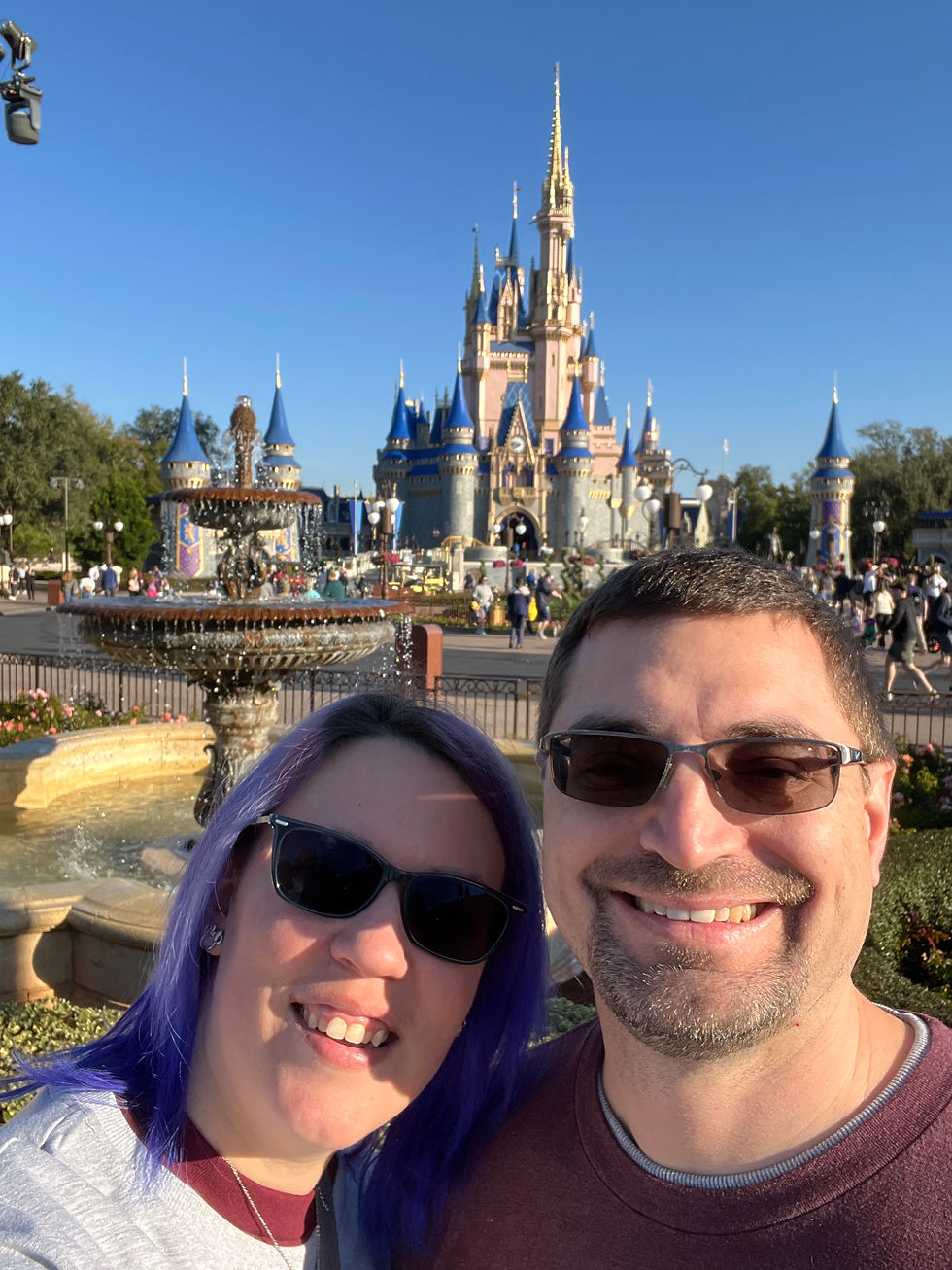
Disney World has become a safe haven for me. The accessibility options there are top-notch, and I don’t feel like a burden when I visit. Yes, it still requires planning (lots of it actually), but I’ll take that over the stress of the unknown any day. Yes, it can be expensive but you get what you pay for and it is definitely worth it! I’ll be launching a full series on how I plan Disney and Universal vacations, including how we navigate with heat sensitivity, food restrictions, mobility tools, and neurodivergent needs. Stay tuned—there’s so much I want to share with you!
And this approach isn’t just for theme parks. No matter where you’re going—beach, city, mountains—there are tools and services out there to make travel easier. You just have to look for them. (For example: in a previous social media post, I shared information on a beach wheelchair that can roll through sand and float in the ocean. It’s pricey, but if beach trips are a regular thing for you, it could be a life-changing investment.)
Final Thoughts
If you take nothing else from this post, let it be this:
✨ Be your own biggest advocate.
✨ Speak up when something isn’t working.
✨ Let others help you—especially your support people.
✨ Plan, adapt, and allow yourself to enjoy the experience.
You are not a burden. You are not alone. Your needs are valid. And there is a whole world out there waiting for you to explore it—on your terms.
-🍑🐐🧳

So tell me: What accessibility hacks or tips have helped you travel more easily? Drop them in the comments—I’d love to hear from you.


Great Article as always.
My accessibility w/ traveling via airports & bus stations have a section when you fill out information for your ticket that you can put whether your physically disabled or Visually impaired and they will have someone escort/guide you to your terminal.